Music
LALOVAVI: Carrying the Tut Language onto the Opera Stage
By Veronica Bey · 8 min

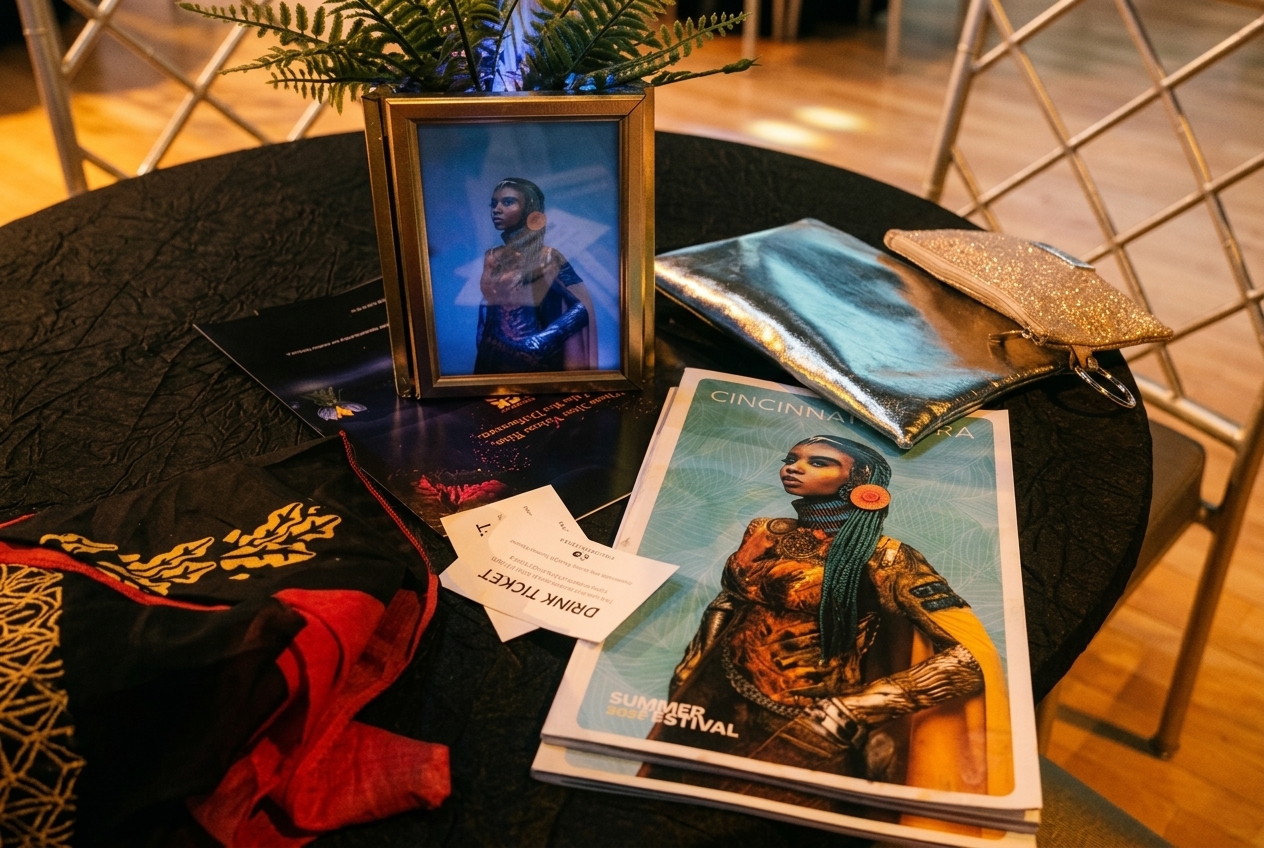
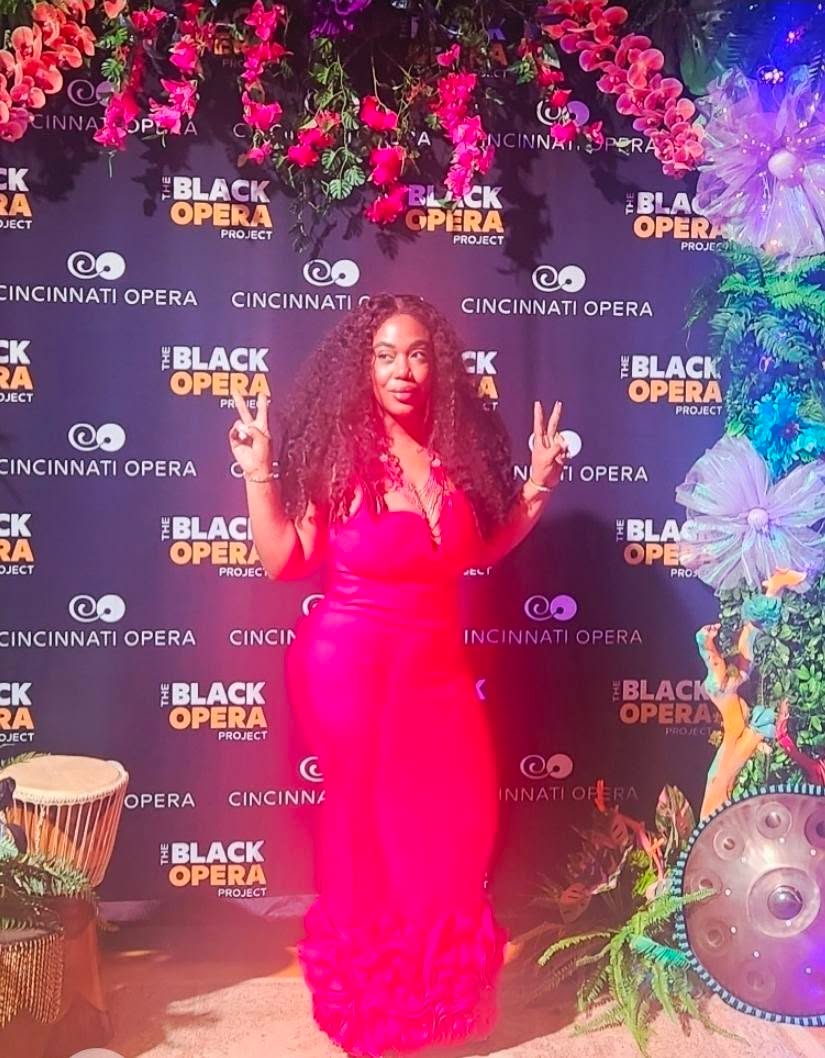
When Cincinnati Opera called about LALOVAVI, I understood at once that this was not an ordinary commission. LALOVAVI — the word means “love” — is the inaugural work of the company's Black Opera Project: an Afrofuturist opera by composer Kevin Day and librettist Tifara Brown, set some four hundred years into the future in a luminous city that was once known as Atlanta. My charge was to steward something older than any of us in the room: the Tut language.
Tut, sometimes written Tutnese, is a coded language cultivated by enslaved Indigenous Black Americans — an oral cipher that allowed a people to teach one another to read, spell, and speak freely in plain sight of those who had outlawed their literacy. It is not a novelty or a costume. It is a technology of survival, a grammar of resistance passed hand to mouth across generations, and it existed as a relic of defiance before the United States existed as a country.
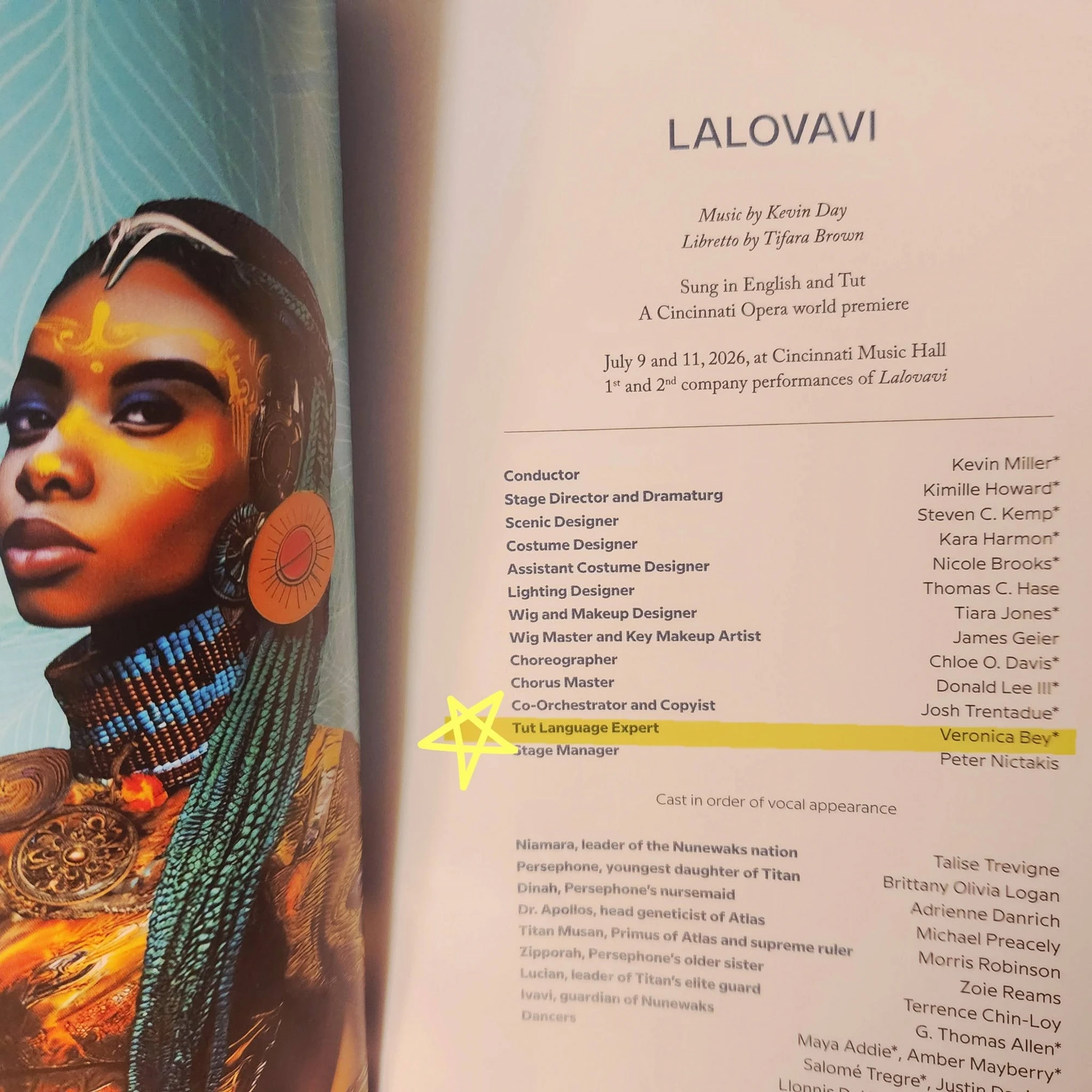
As LALOVAVI's Tut Language Expert — credited in the Cincinnati Opera program under my consultancy, Niiji Consulting — I coached the cast on far more than pronunciation. We worked the cadence and the breath of the language, yes — LALOVAVI is sung in both English and Tut, with the Tut projected in translation above the stage — but we spent just as long on the history and the dignity beneath each syllable. A singer cannot honor a word of resistance without first understanding what it cost to keep that word alive.
That is the quiet argument of Afrofuturism, and of this opera: to place a language of concealment four centuries into the future is to insist that what was once hidden becomes heritage, and what was once coded becomes canon. The audience does not merely hear a story about Black joy and survival; they hear the very instrument of that survival lifted into aria.
When The Wall Street Journal reviewed the premiere as “The Black Opera Project's Glittery Debut,” I thought of every ancestor who spelled a forbidden word in Tut so that a child might one day read freely. To hear that language projected, sung, and reviewed in those pages is its own kind of emancipation — belated, but real.
This is the work I am proudest to carry into Sybils & Society and, in time, into the salons of The Horizon Circle: culture moved across distance and across centuries, so that what our people encoded in the dark might finally be sung in the light.
Further reading
Culture carried across distance and time.
Discover The Horizon Circle