Heritage & Fashion · Icon
An Ode to Jackée: Satin, Fur & the Last Word
By Veronica Bey · 5 min
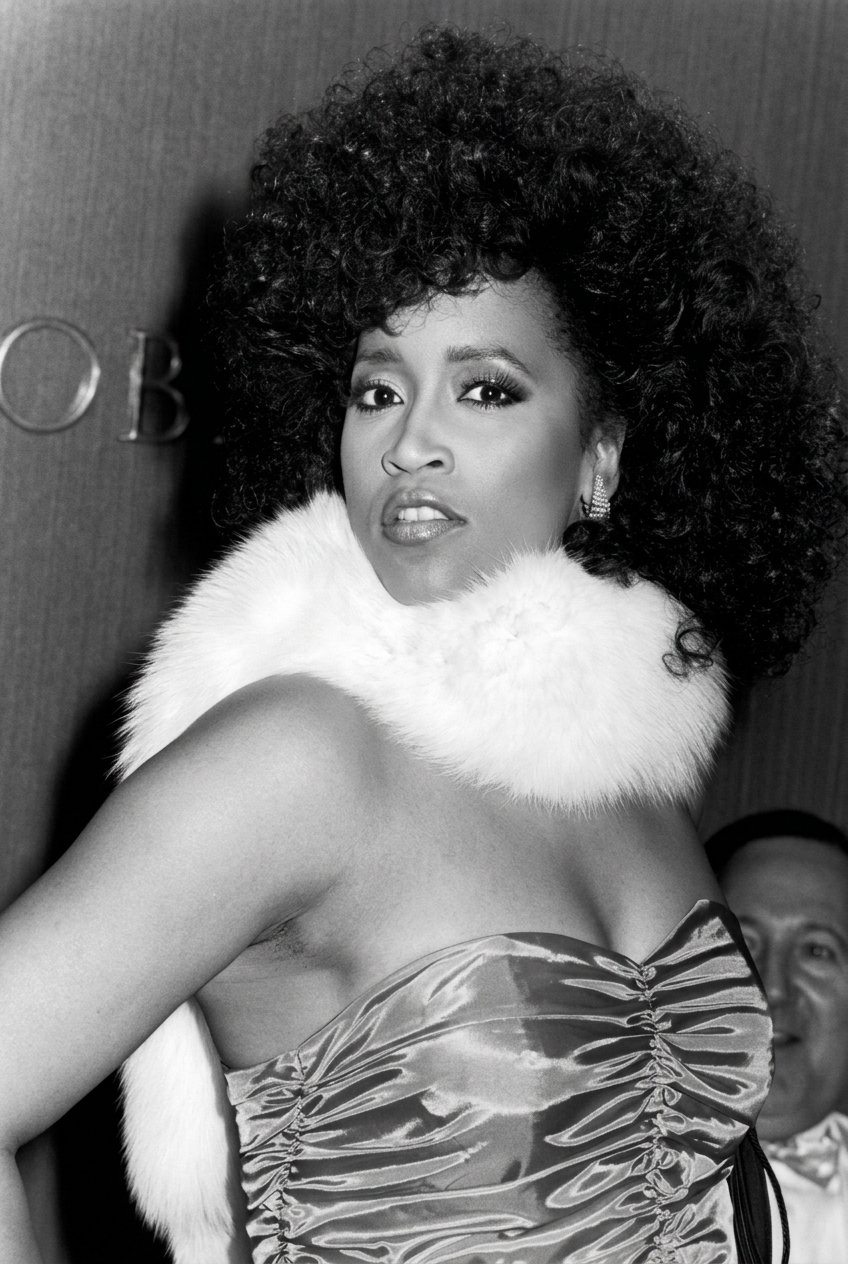
Some women enter a room; Jackée Harry made an entrance a genre. Before she said a word you had the whole thesis: the tower of curls, the white fur slipping off one shoulder, the satin catching every light in the house. As Sandra Clark on 227, she turned the doorway into a runway and the double-take into a punchline — and in 1987 she became the first Black woman to win an Emmy for Outstanding Supporting Actress in a Comedy Series. The trophy was for the acting. The legend was for the look.
Her style was a beautiful contradiction, and that was the point. The marabou and the mink read as pure Hollywood fantasy, but the delivery — the smirk, the slow turn, the eyebrow — kept it human and hilarious. Jackée understood something our grandmothers knew: that a Black woman's glamour is never only decorative. It is armor, it is comedy, it is the last word in an argument nobody realized they were losing.
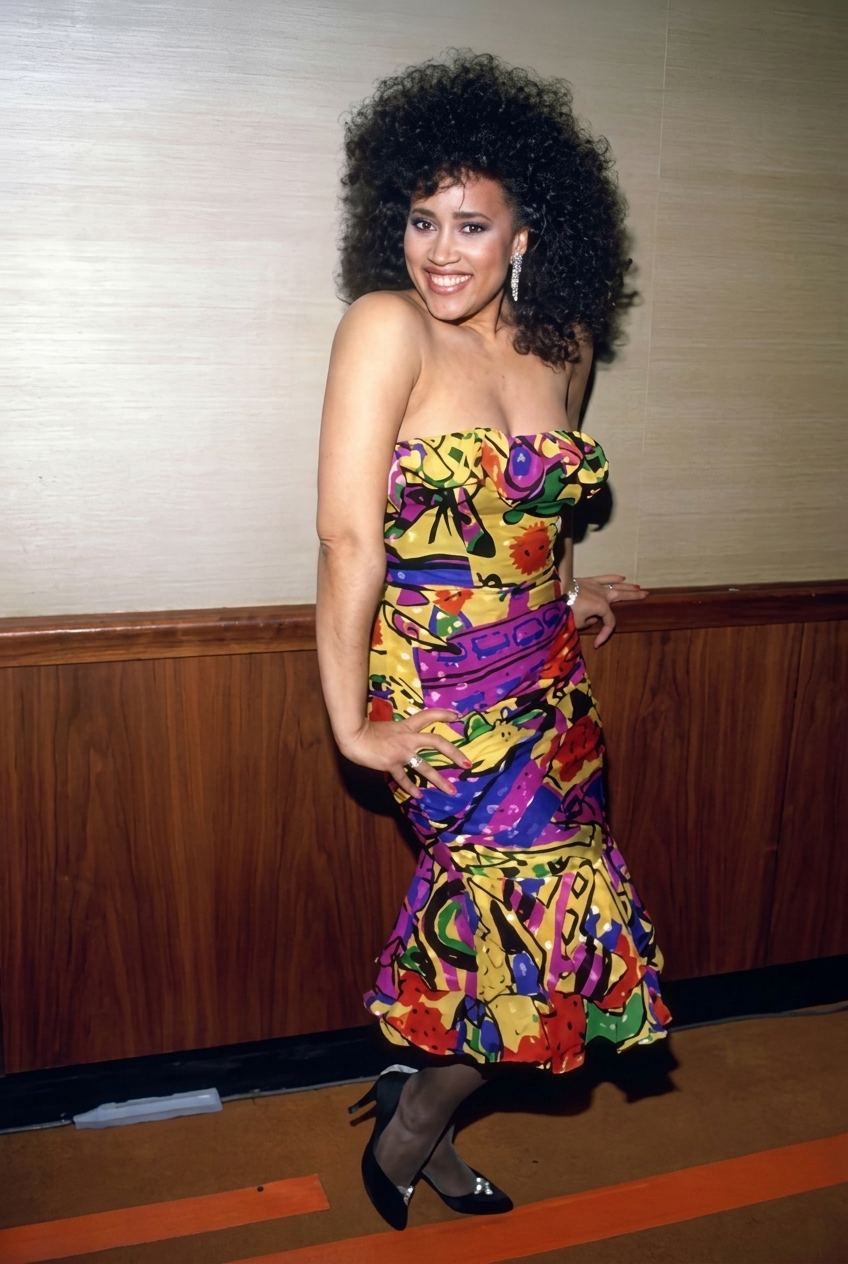
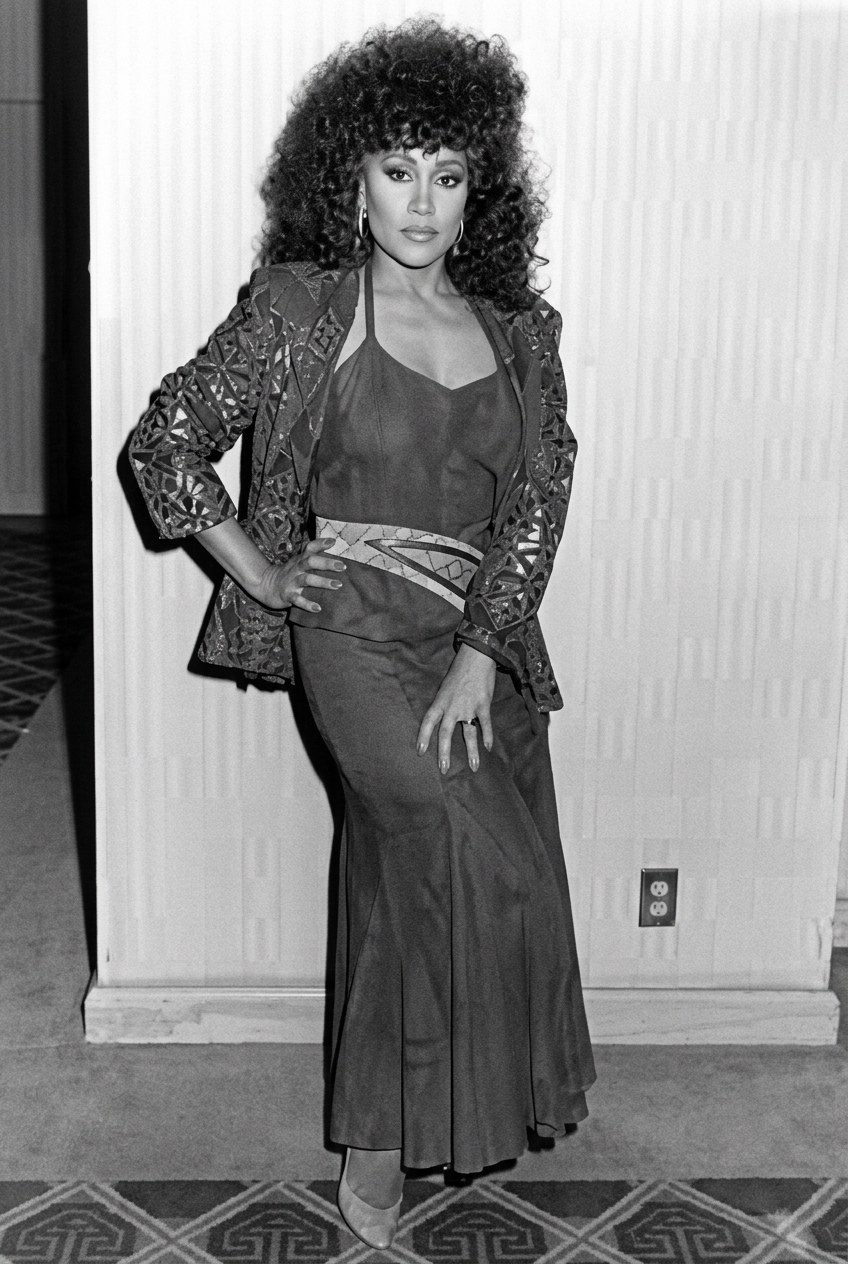
Look at the wardrobe and you find the eighties at their most gloriously unbothered — a strapless column of ruched satin, a print dress in carnival brights with a mermaid hem, a slim gown worn with a jacket thrown over the shoulders like an afterthought. Nothing shy. Everything intentional. She dressed the way she acted: big, warm, and completely in command of the frame.
What we owe her is the permission she modeled — to be sensual and silly, adorned and in charge, all at once. She made vanity generous. She made big hair a thesis statement. She let Black women see, on primetime, a version of themselves that was allowed to take up the whole doorway.
So this is the ode: to Jackée, who never once dimmed herself to fit the room, and who proved that elegance, in the right hands, can be the funniest thing in it. Long may she wear the fur.
Further reading
Culture carried across distance and time.
Discover The Horizon Circle